Almost every day someone walks into our shop and asks the same question: "Is this a real diamond, or something that looks like one?" The short answer: a lab-grown diamond is a diamond. Same material, same structure, same sparkle. The difference is where it was formed. Here we'll explain it without big words, and without selling you stories.
What a lab-grown diamond is
A diamond is carbon with its atoms packed into a very dense crystal. That's what gives it its hardness and its sparkle. A natural diamond forms deep in the earth, under huge pressure and heat, over millions of years. A lab-grown diamond is made of the same carbon, in the same crystal structure, but inside a machine, in a few weeks.
The Gemological Institute of America (GIA), one of the best-known diamond grading bodies in the world, writes that lab-grown diamonds have essentially the same chemical, optical and physical properties as natural diamonds. Put simply: it behaves like a diamond because it is one.
How diamonds are grown
There are two main methods, and both produce diamond:
- HPHT (high pressure, high temperature): this copies the conditions deep in the earth. Carbon is put under enormous pressure and heat, and a new crystal grows around a small diamond crystal (the "seed").
- CVD (chemical vapor deposition): a carbon-rich gas is heated in a sealed chamber, and carbon atoms settle on the seed layer by layer until a crystal is built.
After growing, the diamond goes through what every natural diamond goes through: polishing, cutting to shape (round, oval, pear, marquise and more) and grading.
A lab-grown diamond is not cubic zirconia
This is where a lot of confusion starts. Cubic zirconia (CZ) and moissanite are simulants: they look like diamond, but they're a different material with different properties. A gemologist spots them easily. A lab-grown diamond is not a simulant. GIA makes this point too.
We also sell jewelry with cubic zirconia, and it's labelled that way on the product page. A piece with a lab-grown diamond is labelled "lab-grown diamond". That's written in our terms too: a lab-grown diamond will be labelled as one.
Can you see the difference?
No. Even an experienced jeweler with a loupe can't tell you for sure whether a stone grew in a lab or in the ground. The difference is found by special instruments in a gemological lab, from tiny marks left by the growing process.
What you can see is what decides the beauty of any diamond: the cut, the color and the clarity. There's no "natural advantage" there. A well-cut lab-grown diamond will sparkle more than a poorly cut natural one.
The same four Cs
Lab-grown diamonds are graded on the same four criteria you know from natural diamonds:
- Carat, weight. A diamond carat is a unit of weight: one carat is 0.2 g. It has nothing to do with the karat of gold, which measures purity. We wrote about that in 14K gold.
- Cut. How well the stone returns light. That's what makes the sparkle.
- Color. How clear the stone is and how free it is of a yellowish tint.
- Clarity. How many small inner marks the stone has.
So what is the difference?
Three things, and it's worth knowing all of them before you buy:
- Origin. One is mined from the earth, the other is grown in a lab. That's the only difference in the material itself.
- Price. A lab-grown diamond costs much less than a natural diamond of the same size and quality. For most people that's the reason to choose it: a bigger stone, or a better one, for the same budget.
- Value over time. Here we have to tell the truth. Lab-grown diamond prices have dropped in recent years, and there's no resale market for them like there is for natural diamonds. You buy a lab-grown diamond because you love it and want to wear it, not as an investment.
Some people also choose a lab-grown diamond because no mining is involved. That's a personal choice, and we won't get into that debate here.
Certificates for lab-grown diamonds
A lab-grown diamond can get a certificate from a gemological lab, just like a natural one. GIA, for example, issues a separate report for lab-grown diamonds and inscribes on the edge of the stone that it was grown in a lab.
What comes with a specific piece? Under our terms, a certificate is included only when the product page or the order confirmation says so. If a certificate matters to you, ask us before you order and we'll tell you exactly what comes with the piece.
Who it suits
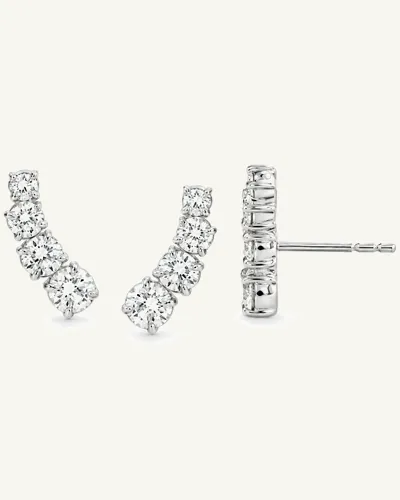
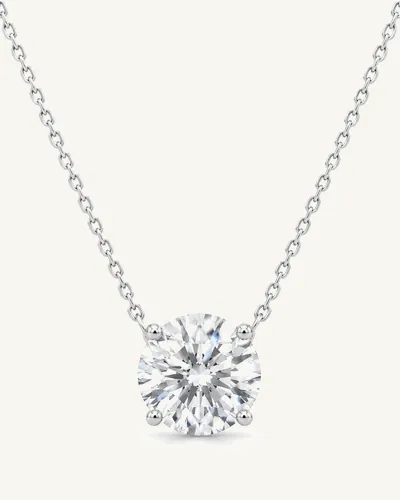
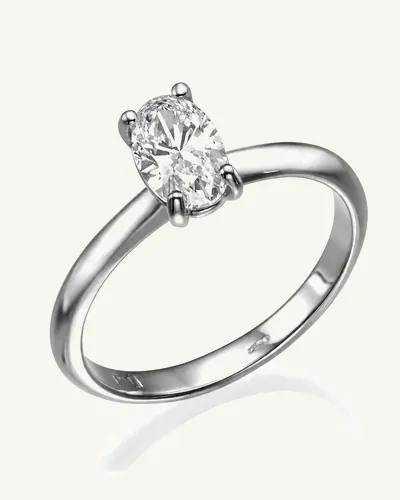
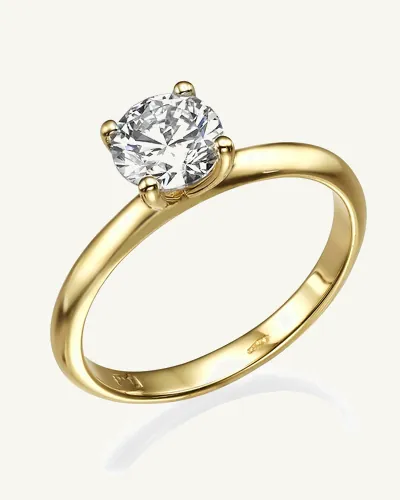
A lab-grown diamond suits someone who wants a real diamond for everyday wear, in a size that would be out of budget as a natural stone. Many couples choose one for an engagement ring, and many women buy themselves earrings or a solitaire necklace.
It suits less someone buying for future value, or someone for whom it matters that the stone formed in nature. That's a fair choice too.
On our site, every lab-grown diamond piece is set in 14K gold, yellow or white. You can see them all in the lab-grown diamonds category, or by type: lab-grown diamond rings, lab-grown diamond earrings and lab-grown diamond necklaces.
Come see it up close
A photo of a diamond never shows what you see in your hand. If you're in the area, come to the shop at 64 Bilu St., Rehovot. We'll take the stones out, put them next to a natural diamond, and you'll see for yourself. You can also ask us anything on WhatsApp, and the owner answers.
Frequently asked questions
Is a lab-grown diamond a real diamond?
Yes. A lab-grown diamond is made of carbon in the same crystal structure as a natural diamond, and according to GIA it has essentially the same chemical, optical and physical properties. The only difference is where it formed.
Can you tell a lab-grown diamond from a natural one?
Not by eye, and not with a regular loupe. The difference is detected by special instruments in a gemological lab.
Does a lab-grown diamond lose its sparkle over time?
No. It's a diamond, with the same hardness and the same sparkle. Like any piece of jewelry, it needs a clean now and then so oil from the skin doesn't dull it.
Is a lab-grown diamond a good investment?
No. Lab-grown diamond prices have dropped in recent years and there's no established resale market for them. You buy one to wear it.
What's the difference between a lab-grown diamond and cubic zirconia?
Cubic zirconia is a simulant made of a different material. A lab-grown diamond is a diamond. On our site every piece is labelled by the stone in it.